Project A05

Project A05

Personalised formative assessment training in simulated experimental physics instruction: Individual differences in the interplay of scaffolding and self-regulation

Summary

A05 focuses on diagnostic and intervention competencies as key formative assessment competencies for teaching and learning with experiments in physics education. The project investigates the interplay between learners' characteristics and cognitive and metacognitive learning process scaffolding, as well as representational scaffolding through the reduction of informational complexity and situation dynamics. Using a VR classroom simulation, the project conducts three longitudinal experimental studies to examine patterns of self-regulated learning, the effects of increasing informational complexity and situation dynamics, and the impact of personalised scaffolding on the development of formative assessment competencies.
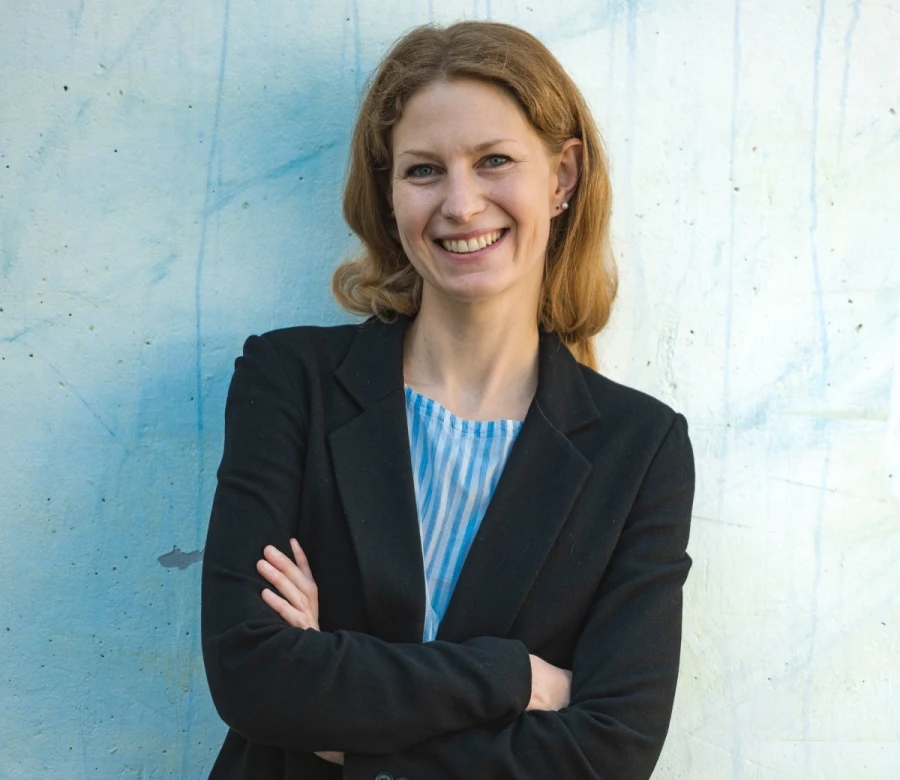
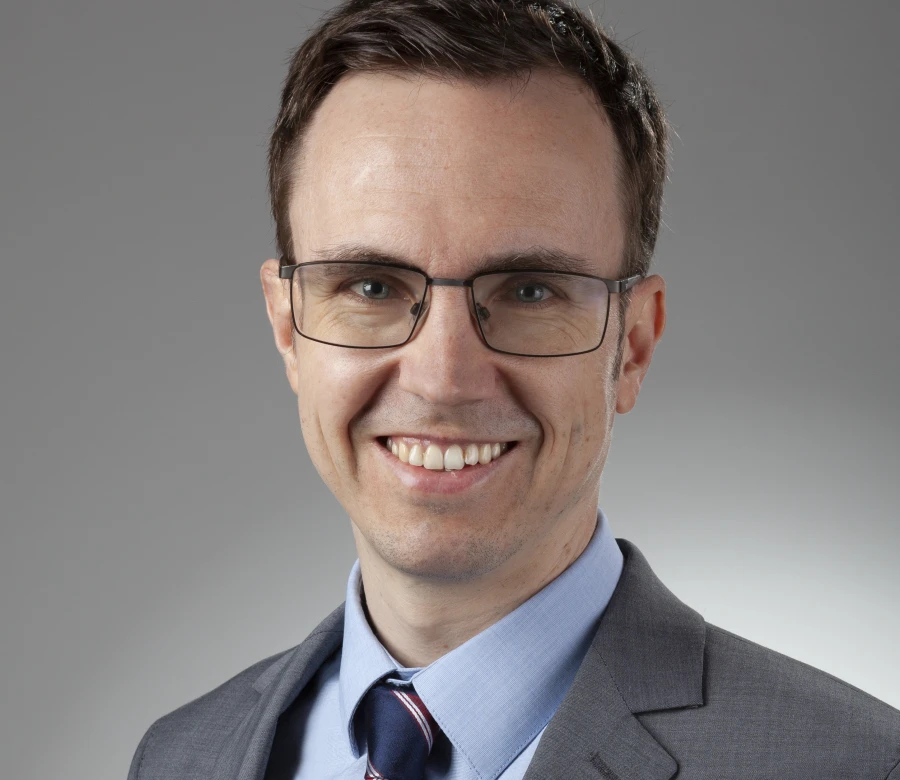
Participants

Principal Investigators

Research associates

Goal

Project A05 investigates how pre-service physics teachers develop on-the-fly formative assessment skills in a VR classroom simulation on physics topics, such as buoyancy. Based on gaze and log data, learning processes will be modelled and used for AI-based personalisation of the simulation.

Research Questions

  • How are individual patterns of self-regulated use of the simulation related to metacognitive learner characteristics, cognitive learner characteristics, and, ultimately, the development of formative assessment (FA) competencies? (RQ1.1)

  • Do additional metacognitive scaffolds (MCS) promote needs-based use of the optional cognitive scaffolds (CS) and improve the development of FA competencies? (RQ1.2)

  • What effects does representational scaffolding have on the cognitive and metacognitive learning processes investigated in RQ1, as well as on the actual development of FA competencies? (RQ2)

  • Can the individual development of FA competencies be supported through AI-based personalisation informed by predictive models? (RQ3)

Methodology

Methodologically, Project A05 employs longitudinal experimental designs within a VR classroom simulation in which pre-service physics teachers engage in diagnostic decision-making and intervention planning in the context of students’ physics experiments. In Studies 1 and 2, different combinations of cognitive, metacognitive, and representational scaffolds are systematically varied and related to the development of formative assessment (FA) competencies using pre-, process-, and post-measures. Learner characteristics, diagnostic and intervention competencies, as well as cognitive learning processes (e.g., encoding and selecting information, processing information, and integrating information into long-term memory) and metacognitive learning processes (e.g., monitoring one’s own cognitive learning processes) are assessed using questionnaires, performance scores, log data, and eye-tracking data. Analyses include latent profile analyses and latent growth curve models. In Study 3, these findings are used to provide personalised scaffolds through AI-based classification and to examine their effects on the development of FA competencies.

Role Within the Collaborative Research Center

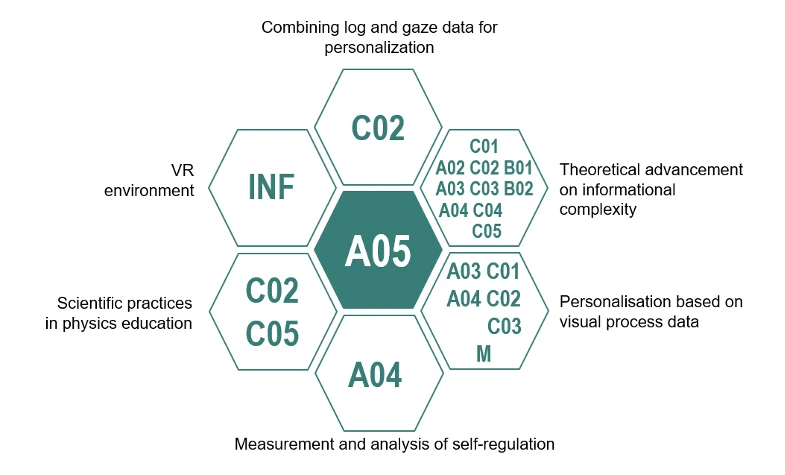
  • A04: Exchange on the measurement, analysis, scaffolding, and learner characteristics of self-regulated cognitive and metacognitive learning in simulations.

  • Project M, A03, A04, C01–C03: Personalisation based on visual process data (eye-tracking).

  • A02–A05, B01, B02, C01–C05: Theoretical work on cue salience and informational complexity for representational scaffolding.

  • C02: Combined use of eye-tracking and log data for personalisation.

  • C02, C05: Domain-specific expertise on simulation-based learning and scientific practices in physics education.

  • Project INF: Personalisation of the simulation.

  • C04: Transfer of the simulation developed in C04 to a VR environment.

  • Project M: Joint data collection, data provision, and aggregation of process data.

Publications

2025

2024

2023

2021

2020

2018

2017